




















The Future of Digital Payments in Saudi Arabia and MENA
The Future of Digital Payments in Saudi Arabia and MENA
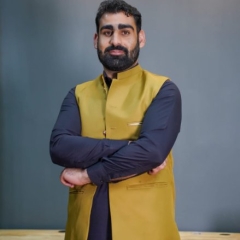
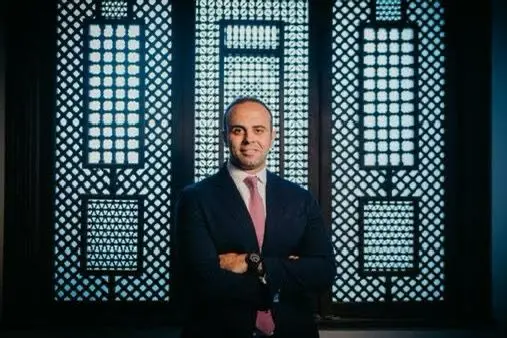
Fintech News Saudi Arabia speaks with Adam Jones, Executive Vice President and Division President, West Arabia at Mastercard, to explore the rapid evolution of digital payments in Saudi Arabia, emerging technologies, financial inclusion, digital commerce and the innovations shaping the future of payments across the wider MENA region.
1. How would you describe the current state of digital payments in Saudi Arabia, and how has the market evolved in recent years?
Saudi Arabia is at the forefront of adopting innovative approaches to engaging with payments. According to the Saudi Central Bank (SAMA), the number of digital transactions in the Kingdom reached 14.6 billion last year, accounting for 85% of total retail payments and exceeding the target of Vision 2030. In 2024, this number stood at 12.6 billion – a 79% share – demonstrating sustained growth.
At Mastercard, we are proud to have contributed to this milestone as a trusted technology partner of the Saudi government. Through momentum in AI-powered technology, cybersecurity capabilities and innovation, we provide the secure infrastructure, data, insights and collaborative ecosystems necessary to accelerate the adoption of digital payments.
2. What are the key factors driving the rapid adoption of digital payments among Saudi consumers and businesses?
It’s a combination of consumer demand, technology innovation and an enabling ecosystem. Shoppers increasingly expect payments to be fast, convenient, seamless and secure, and SAMA’s ongoing efforts to modernize the national payments ecosystem cater to this need. Meanwhile, high smartphone penetration and the expansion of contactless payments and digital wallets are making those experiences more accessible. A prime example of this evolution is our collaboration with Google to bring Google Pay to Saudi Arabia.
3. As e-commerce continues to expand, what payment innovations will be most important in shaping the next phase of digital commerce in Saudi Arabia?
Buy now, pay later (BNPL) solutions, which give consumers the flexibility to split their purchases into interest-free installments with no processing fees, have emerged as key enablers of smarter spending and more confident purchasing. According to Research and Markets, the value of the BNPL market in the Kingdom is currently estimated at $1.08 billion and is projected to almost double to $2.06 billion by 2030.
At Mastercard, we have expanded Mastercard Installments, our unique global BNPL program that delivers greater choice at checkout, whether online or in store, to the region. In 2024, Saudi National Bank (SNB) became the first financial institution in Saudi Arabia to adopt Mastercard Installments with the launch of the Flexi credit card. In addition, Mastercard is expanding payment choice by enabling leading BNPL platforms as integrated checkout methods on Mastercard Payment Gateway, optionally available to all merchants.
4. Tokenization is gaining significant momentum across MENA. How do you see it transforming payment security and the consumer experience?
Tokenization holds the potential to accelerate innovation across physical and digital commerce while enhancing security and trust. At Mastercard, we have seen tokenization materially reduce fraud and improve authorization rates, and we aim to tokenize every transaction on our network by 2030.
We offer tokenization capabilities through Mastercard Gateway, our global payment infrastructure that enables secure transaction processing across multiple channels. Mastercard Gateway is now part of Mastercard Merchant Solutions, a next-generation payments platform that unifies our market-leading services to help businesses navigate the complexities of commerce around the world.
Under the patronage of SAMA, we launched a world-class on-soil technology infrastructure in Saudi Arabia, powered by Mastercard Gateway, that enables the processing of e-commerce transactions locally. Last December, we obtained a certification to process online transactions through SAMA’s new e-commerce payments interface.
5. What role will AI and emerging technologies play in the future of payments, particularly in areas such as fraud prevention, personalization and seamless checkout?
AI helps make every digital experience more secure, intelligent, personal and efficient. At Mastercard, we handle billions of transactions each year quickly and securely with the support of AI. We use it to synthesize what’s important at the speed that individuals and businesses demand. Our investments in AI and data technologies enable us to uncover insights, infuse intelligence into payments and outsmart fraud.
AI is at the core of the work of our Cyber Resilience Center in Riyadh, where it enhances our ability to detect and respond to sophisticated cyber threats and fraud attempts. With recent generative and agentic AI advancements, we’re creating more pioneering solutions to empower our partners with unmatched capabilities with built-in trust, helping achieve the objective of Vision 2030 to build a secure, resilient and prosperous digital economy.
6. How can the payments ecosystem better support Saudi Arabia’s SMEs as they accelerate their digital transformation?
At Mastercard, we have recently issued our Dreamonomics report that provides a global view of the forces reshaping small and medium businesses’ perceptions and approach to growth. The findings indicate a strong appetite for embracing technology-driven innovation among SMEs in the Middle East and Africa. According to the study, 43% of the respondents in the region use AI or machine learning tools to automate workflows, and 42% use cybersecurity tools – the highest percentage of any region. SMEs in the Middle East and Africa are also more than twice as likely as the global average to use emerging payment methods.
Our 2026 SME Confidence Index notes that three in four Saudi SMEs remain confident about the next 12 months as they invest in digital transformation. The payments ecosystem must build on this momentum and provide small and medium-sized businesses with the digital tools they need to grow and scale. This includes instant payments for cash flow, tap-on-phone for easy acceptance and integrated solutions that simplify operations.
7. Financial inclusion remains an important priority across MENA. Where do you see the biggest opportunities to bring more consumers and businesses into the digital economy?
At Mastercard, we firmly believe that the digital economy must work for everyone in it. Over the past decade, we connected 1 billion people and 65 million small businesses worldwide to the digital economy.
Today, we know access on its own is not enough. New entrants to the digital economy need support and security to reap its full potential. That’s why we made a new pledge to connect and protect 500 million people and small businesses on their journey to financial health by 2030.
Our approach is grounded in security, because protection is essential; innovation, because new capabilities must be responsibly delivered to everyone; and agility and proven scale, because economies rely on infrastructure that works everywhere. Our aim is to empower, because the digital economy is at its strongest when participation is meaningful in everyday life.
8. Beyond Saudi Arabia, which payment trends are likely to have the greatest impact across the wider MENA region over the next three to five years?
I see several trends converging – from advances in AI to the growth of cryptocurrencies. This is not only creating new ways to pay but also reshaping how money moves, how trust is built and how value is created. Payments will become more predictive and interoperable between traditional and new platforms.
In-store checkout will go seamless with biometric solutions, such as paying with a smile, while one-click checkout online is within reach by 2030, thanks to the acceleration of tokenization. For merchants, real-time payments are becoming a reality as we continue to roll out Mastercard Transaction Stream, our innovative processing technology that can settle payments on the same day.
Finally, agentic commerce, where autonomous agents proactively discover and purchase products for consumers, has the potential to catalyze the growth of e-commerce in the region. According to a new Mastercard Signals report, agent-assisted consumer spending across the globe is forecast to reach $3 to 5 trillion by 2030.
At Mastercard, we’re innovating to fuel the momentum that will drive the era of agentic commerce. In 2025, we launched Mastercard Agent Pay, which serves as the trust layer for agentic commerce, allowing merchants to reliably identify and accept transactions from verified digital agents. Last November, we marked the debut of Agent Pay outside the US here in the Middle East, and we are currently in discussions with leading merchants to expand use cases across the region.
9. As payments become increasingly interconnected across borders, what opportunities do you see for Saudi Arabia to strengthen its position as a regional hub for digital commerce and financial innovation?
Saudi Arabia is one of the world’s largest outbound remittance markets due to its sizeable expatriate workforce. According to SAMA, personal remittances by expatriates in the Kingdom reached a record high last year at SAR165.5 billion.
This surge is accompanied by a rising consumer demand for accessible, practical and cost-effective international money movement options. At Mastercard, we are helping redefine Saudi Arabia’s cross-border payments landscape with Mastercard Move, our comprehensive portfolio of money movement capabilities.
Mastercard Move connects more than 17 billion endpoints across 200+ countries and over 150 currencies, with access to more than 95% of the world’s banked population. Powering a variety of payment experiences, including person-to-person transfers, business transactions and disbursements, the innovative proposition offers multiple payout methods, including bank accounts, mobile wallets, cards and cash pickup.
10Looking ahead, what does the future of digital payments in Saudi Arabia look like – and what innovations should the industry be watching most closely?
The future of payments in Saudi Arabia will be personalized, secure, intelligent, invisible and inclusive. The playing field will be dominated by adaptive solutions that fit seamlessly into people’s lifestyles. Every transaction will be powered by smart, biometrics-driven systems that anticipate consumer needs and eliminate the need to repeatedly present credentials. Meanwhile, safeguards like passkeys and tokens will work quietly in the background to secure funds and personal data while people enjoy peace of mind. Most importantly, everyone will be able to access essential financial services at their fingertips.
And – as with every payments innovation – Mastercard will be right there at the center of it all.
What's Your Reaction?
 Like
1
Like
1
 Dislike
0
Dislike
0
 Love
0
Love
0
 Funny
0
Funny
0
 Angry
0
Angry
0
 Sad
0
Sad
0
 Wow
0
Wow
0