










































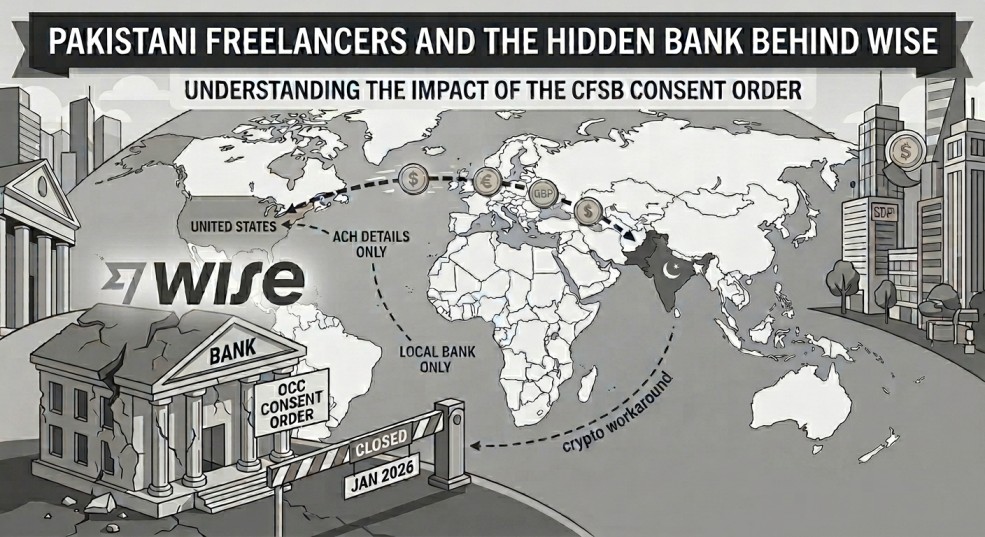


Getting Paid Globally: Fixing Pakistan's Payment Infrastructure for Freelancers
Getting Paid Globally: Fixing Pakistan's Payment Infrastructure for Freelancers


Fintech News Pakistan | Expert Interview
Guest: Samra Kanwal, Fintech Research Analyst
Introduction
Pakistan has emerged as an important market in the global freelance economy, with thousands of professionals providing services to international clients across technology, design, digital marketing, consulting, and other sectors.
However, receiving international payments remains a significant challenge for many Pakistani freelancers. Despite the availability of digital wallets, banking channels, payment gateways, and remittance services, issues around accessibility, transaction costs, exchange rates, settlement delays, compliance requirements, and limited payment options continue to affect their experience.
In this interview, Fintech News Pakistan aims to explore the existing payment infrastructure available to Pakistani freelancers, understand how money moves across borders and where costs and delays arise, and examine how government institutions, regulators, banks, fintech companies, and payment service providers can work together to build a more accessible, affordable, and efficient payment ecosystem.
Interview Questions
1. Understanding the Current Landscape
How would you assess Pakistan's current cross-border payment infrastructure for freelancers? What payment channels and financial services are currently available, and how effectively do they address the needs of independent professionals receiving payments from international clients?
Answer:
Pakistan's cross-border payment infrastructure for freelancers has notable gaps in accessibility, affordability and reliability. The absence of official domestic access to PayPal and Stripe limits options, particularly for professionals working directly with international clients. According to SBP data, freelancers generated $1.76 billion in FY26, with receipts growing 45% year-on-year in Q1 FY27. They rely on SWIFT transfers, digital wallets and payout platforms such as Payoneer and Elevate Pay. Although these channels have improved access and SBP's April 2026 reforms have simplified domestic processing, high fees, verification hurdles and opaque exchange rates persist. Marketplaces also control the payout options available to freelancers. Much of the first mile remains outside Pakistan's control, exposing freelancers to unexpected deductions and account restrictions.
2. Understanding How Money Moves
When an international client pays a Pakistani freelancer, what typically happens between the initiation of the payment and the money reaching the freelancer's local bank account or digital wallet? Could you explain the key intermediaries involved and identify where transaction costs, delays, or operational inefficiencies arise?
Answer:
Funds rarely move directly. On Fiverr, the client pays the platform, which releases the freelancer's earnings through an available withdrawal method, such as Payoneer or a bank transfer. The payout provider or platform processes the withdrawal, applies the relevant fees and currency conversion, and transfers the proceeds to the freelancer's Pakistani account. Upwork offers Direct to Local Bank, Payoneer and international wire transfer options. Direct client wires typically pass through SWIFT and may involve correspondent banks before reaching the beneficiary bank. Each intermediary can introduce charges, processing delays or additional checks. Other sources of friction include first-time bank verification, name and account-type mismatches, opaque deductions and returned transfers. Freelancers often have limited visibility into where a payment is delayed or why it fails.
3. The Cost of Receiving International Payments
Many freelancers face deductions through intermediary banks, payment service providers, currency conversion, and withdrawal fees. What are the major cost components involved in receiving international payments in Pakistan, and how can the overall cost of transactions be reduced?
Answer:
The cost is a stack of deductions along the payment route. It can include marketplace commissions, payout and withdrawal fees, currency conversion spreads, intermediary bank charges on SWIFT transfers, receiving bank fees and applicable withholding tax. Exchange-rate spreads and intermediary charges can exceed headline fees, making the actual cost difficult to calculate.
Three steps can help reduce these costs. Eligible PSEB-registered exporters of software, IT and IT-enabled services can benefit from the 0.25% withholding tax rate, subject to applicable conditions. Freelancers can retain permitted export earnings in an Exporters' Special Foreign Currency Account (ESFCA) and choose when to convert them. They should also match payout routes to invoice size: flat fees disproportionately affect smaller payments, while exchange-rate spreads can become more significant on larger transfers.
4. Access to Global Payment Platforms
Pakistani freelancers often have limited access to some internationally recognised payment platforms and services. What are the major regulatory, operational, commercial, or infrastructure-related barriers preventing global payment providers from fully serving Pakistan's freelance market?
Answer:
Barriers are structural, spanning regulatory compliance, operational dependencies and market economics. A provider seeking to operate directly in Pakistan may require authorization under the applicable regulatory framework, alongside partnerships with local commercial banks or authorized dealers. Providers must also meet customer due diligence, Anti-Money Laundering and Counter-Financing of Terrorism (AML/CFT), transaction reporting and foreign exchange requirements. These obligations increase compliance and integration costs.
Commercially, global providers weigh these costs against expected transaction volumes, fraud exposure, cross-border chargebacks and jurisdictional risk.
Service delivery also depends on local banking networks and payment infrastructure for fund collection and settlement. Meanwhile, marketplaces such as Upwork and Fiverr determine which payout methods they support. Local fintechs must secure the necessary integrations and commercial agreements to become approved options. Ultimately, market access depends on regulatory requirements, commercial viability, banking partnerships and marketplace approval.
5. The Role of Banks and Local Fintechs
How effectively are Pakistani banks, digital banks, electronic money institutions, and fintech companies addressing freelancers' payment needs? What innovative products or partnerships could help freelancers receive, hold, convert, and withdraw international earnings more conveniently?
Answer:
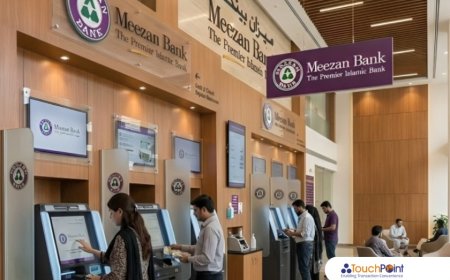
SBP has introduced regulatory reforms to simplify export documentation and improve processing timelines, but the customer experience remains inconsistent. Its April 2026 reforms replaced repeated Form R submissions with a one-time service declaration and introduced a one-working-day processing requirement for eligible export receipts. However, my operational review of eight commercial banks revealed significant service gaps. Query resolution ranged from basic website FAQs and automated bots to mandatory branch visits, with observed resolution times of two to fifteen days.
Three improvements are necessary: clear account permissions and documentation requirements, dedicated freelancer support teams, and fully digital onboarding and account-conversion processes. Banks, digital banks, EMIs and fintechs could also develop integrated products combining international payments, foreign currency retention, conversion and local withdrawals. Partnerships with international payout platforms, supported by clear safeguarding arrangements and transparent fees, could further improve the experience.
6. Regulatory Framework and Government's Role
What changes are needed in Pakistan's regulatory framework to make cross-border payments more freelancer-friendly? How can the State Bank of Pakistan, the Ministry of Finance, and other relevant government institutions facilitate innovation while maintaining appropriate AML, KYC, foreign exchange, and compliance safeguards?
Answer:
SBP has introduced important reforms through EPD Circular Letter No. 06 of 2026, simplifying export documentation and setting processing requirements for eligible IT and freelance export receipts and ESFCA transactions. The remaining challenge is consistent implementation.
Four measures are needed. First, introduce measurable service and complaint-resolution standards for banks handling freelancer transactions. Second, require banks to offer remote account-conversion processes for existing customers. Third, coordinate guidance from SBP, FBR and PSEB on Proceeds Realization Certificates and documentation required for applicable tax treatment. Fourth, establish a public early-warning dashboard through SBP or PSEB to communicate verified platform disruptions and legitimate alternative payment routes.
The objective should be to make compliance predictable and accessible while maintaining effective AML/KYC safeguards, rather than weakening regulatory oversight.
7. Currency Conversion and Financial Inclusion
Freelancers often experience uncertainty around exchange rates, currency conversion charges, and the ability to retain foreign currency earnings. What improvements are needed in foreign currency accounts, digital wallets, exchange rate transparency, and access to foreign currency services?
Answer:
Before confirming a withdrawal, a freelancer should see three figures: the mid-market exchange rate as a benchmark, the provider's exchange-rate spread as a percentage, and an itemised breakdown of fees. Without this information, the actual cost remains hidden until the money arrives.
Pakistani freelancers can retain permitted export earnings in Exporters' Special Foreign Currency Accounts (ESFCAs) at authorized banks. Some international platforms also offer foreign currency balances, but the institution holding those funds and the applicable safeguarding arrangements vary by provider.
Three improvements are necessary: providers should disclose exchange-rate spreads, identify the institution responsible for holding customer funds, and explain which restrictions arise from licensing requirements, banking partnerships or SBP regulations. These measures would improve pricing transparency, consumer protection and freelancers' ability to make informed financial decisions.
8. Learning from International Markets
Which countries have developed particularly effective payment infrastructure for freelancers and digital service exporters? What lessons could Pakistan learn from markets such as India, Bangladesh, the Philippines, or other emerging digital economies?
Answer:
Two regional models offer useful structural lessons.
India's Unified Payments Interface (UPI) provides a public real-time domestic payment rail. Its linkage with Singapore's PayNow demonstrates how domestic payment systems can connect internationally to facilitate faster cross-border transfers. Although not designed specifically for freelance exports, it offers a model of payment-system interoperability.
The Philippines provides another lesson through its regulated electronic money issuer framework. Providers such as GCash and Maya demonstrate how licensed non-bank institutions can offer digital wallets and payment services at scale, expanding access beyond traditional banking channels. However, the distinction between e-money and bank deposits remains important for customer fund protection.
Pakistan's broader lesson is that regulators establish the rules, while banks, fintechs and payment platforms shape much of the customer experience. Clear licensing categories, interoperable infrastructure and transparent fee disclosures can improve the ecosystem without dependence on any single proprietary payment product.
9. Building a Better Payment Ecosystem
If you could recommend three practical reforms to improve payment infrastructure for Pakistani freelancers over the next two to three years, what would they be? Which stakeholders should take the lead: government, regulators, commercial banks, fintech startups, or international payment providers?
Answer:
Pakistan controls the last mile, where foreign earnings reach domestic bank accounts. Reform should prioritise operational failures that regulators can address.
1. Public Bank Performance Scorecards: SBP should conduct mystery-shopping audits and publish banks' performance on processing timelines, PRC issuance, failed transactions and complaint resolution. Non-compliance should trigger supervisory reviews and corrective action.
2. Fully Digital Execution: Banks should eliminate unnecessary branch visits and paper-based processes for freelancer onboarding, ESFCA access, declarations, account conversions and dispute resolution.
3. Cross-Border Interoperability: SBP should coordinate banks, fintechs and international providers, complete Raast-Buna connectivity, and assess opportunities for participation in international interoperability initiatives such as Project Nexus.
SBP must establish and enforce standards. Banks and fintechs must deliver them, while international providers should support integration.
10. The Future of Pakistan's Freelance Economy
Looking ahead, what role can emerging technologies such as real-time payments, digital identity, open banking, blockchain-based settlement, and interoperable payment systems play in transforming cross-border payments? What would an ideal payment experience for a Pakistani freelancer look like by 2030?
Answer:
Each technology matters where it can improve the payment journey. Raast enables instant domestic payments, while international interoperability could extend this capability across borders, connecting banks, wallets and payment providers. Digital identity could reduce repeated onboarding while preserving verification requirements. Open banking could allow freelancers to share verified income records with lenders and build financial histories. Blockchain-based settlement may improve efficiency on specific corridors, but cannot replace rules governing fund custody, disclosure and accountability.
By 2030, a freelancer should be able to open an account digitally and complete streamlined verification. Before every withdrawal, they should see the exchange rate, spread and fees. Eligible payments should be processed within applicable timelines, with PRCs issued digitally. Freelancers should be able to retain permitted earnings in foreign currency. Every provider should identify the institution holding the funds and explain any payment hold or return. When something goes wrong, a clear complaints process should identify the institution responsible for resolving the issue.
Closing Note
Thank you, Samra, for sharing your insights with Fintech News Pakistan. We believe improving cross-border payment infrastructure is essential not only for freelancers but also for Pakistan's broader digital economy, IT exports, and financial inclusion agenda.
What's Your Reaction?
 Like
0
 Dislike
0
 Love
0
 Funny
0
 Angry
0
 Sad
0
 Wow
0