



































Inside the Malakut Business Forum 2026: Where Finance, AI and Trade Meet
Inside the Malakut Business Forum 2026: Where Finance, AI and Trade Meet


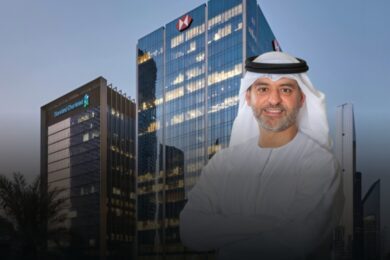
Ahead of the Malakut Business Forum 2026 in Dubai on 25 November, Alex Dolgopolov, CEO of Malakut, the Founding Partner of Malakut Business Forum 2026,explains why the invitation-only event puts the quality of the room above attendance numbers. He also sets out why AI claims must show up in the P&L, how fintech and banks can learn from the businesses they serve, and what he hopes delegates take away on innovation and the future of trade.
1. What is the Malakut Business Forum 2026, and what do you want delegates to gain from the day?
It is a gathering of business owners, senior executives and specialists from sectors including manufacturing, energy, finance, food, technology, logistics, insurance and retail. The discussions cover finance, risk, logistics, technology and AI. Many of these people deal with similar problems but rarely have the opportunity to compare experiences.
The event is by invitation only, and we take care to bring together people who have something relevant to contribute. For us, who is in the room matters more than attendance numbers.
At Malakut, we work with businesses across sectors and countries. Sometimes we can see a useful connection between two companies before they see it themselves. The forum gives us an opportunity to bring them together.
I want delegates to leave having met a few people worth staying in touch with, and with an idea they want to discuss with their team the next morning. We are putting a lot of work into making the day worth their time.
2. How will the Finance and Technology streams address the challenges facing fintech and financial institutions today?
We are approaching these subjects from the perspective of the businesses using financial services. Behind a transaction there may be a shipment that needs to leave, a supplier waiting for payment or an opportunity a company cannot pursue without financing.
The programme includes discussions on restructuring, sources of capital and technology investments that changed the economics of a business. For fintech companies and financial institutions, the value is in hearing how those decisions are made on the client’s side, what holds them back and where better financial services could make a difference.
3. Which fintech themes, such as payments, data residency and digital platforms, will feature on the agenda?
The strongest emphasis is on financing businesses, the economics of technology investment and the growing role of AI, including in trading. We are looking at these subjects in the context of companies that need to move goods, access capital and manage risk across borders.
Payments, data residency and digital platforms all matter in that context. A company expanding internationally needs to understand how it will receive money, where its data will be stored and whether its systems can work with those of its partners. These are the kinds of practical questions we want people to bring into the discussions.
My own interest is in where the process still breaks down. You can have a very good digital interface and still spend days waiting for someone to check a document manually. There is a significant opportunity in solving those less visible problems.
4. How will the AI sessions show real results, such as savings that reached the P&L?
I would start by being quite strict about what we call a saving. If AI saves an employee five hours a week, that is useful. But you cannot automatically multiply those hours by their hourly employment cost and say that profit has increased. What happened to the time? Did the team serve more clients, reduce overtime or handle growth without adding the same level of cost?
That is the level of discussion I want. Any claim about financial results should account for implementation, integration and the human checking still required.
We are using AI at Malakut ourselves, so I have a personal interest in getting beyond impressive demonstrations. I am optimistic about what it can do. It allows us to test ideas at a speed that was previously impossible. The next step is to establish which of those ideas improves the business enough to justify scaling it.
We will also hear from a speaker with insight into frontier AI research and developments at leading labs. I want delegates to get a sense of what is coming next for large language models, how the capabilities of AI agents could develop and what businesses may be able to do with them in the near future. Those developments matter when you are deciding what to invest in today.
5. How can fintech companies and banks benefit from the partner showcase and networking reception?
They will have the opportunity to speak with people who buy and use their services, including business owners who can explain exactly why a product does or does not work for them. That is valuable feedback, especially when a company is developing something new or entering a different market.
The showcase gives people something concrete to discuss. The reception gives them time to continue the conversation without having to rush to the next session.
Our hosts will also be making introductions throughout the day. We know many of the businesses attending and can help connect people around a particular need. For a fintech company, a useful outcome could be finding a customer willing to test a product and give honest feedback. For a bank, it could be understanding a client’s expansion plans early enough to help finance them.
6. What do you expect delegates to take away from the forum on innovation and the future of global trade?
I hope they leave with a clearer view of where their own business can improve and a little more confidence to try something new. There is enormous scope to make trade easier, particularly in the work between companies: exchanging information, arranging finance, checking documents and placing insurance.
AI makes it possible to test several approaches quickly and at a much lower cost. For anyone building a business, I find that very exciting. But the value depends on understanding the problem well enough in the first place. That is why it matters to have the people developing technology in the same room as the people running factories, financing shipments and managing supply chains.
My invitation is to come with an open mind and talk to someone outside your usual circle. They may have a very different view of a problem you have been looking at for years.
What's Your Reaction?
 Like
0
 Dislike
0
 Love
0
 Funny
0
 Angry
0
 Sad
0
 Wow
0