































































Tokenised Deposits are Advancing in the UAE, But is Banking Infrastructure Keeping Up?
Tokenised Deposits are Advancing in the UAE, But is Banking Infrastructure Keeping Up?

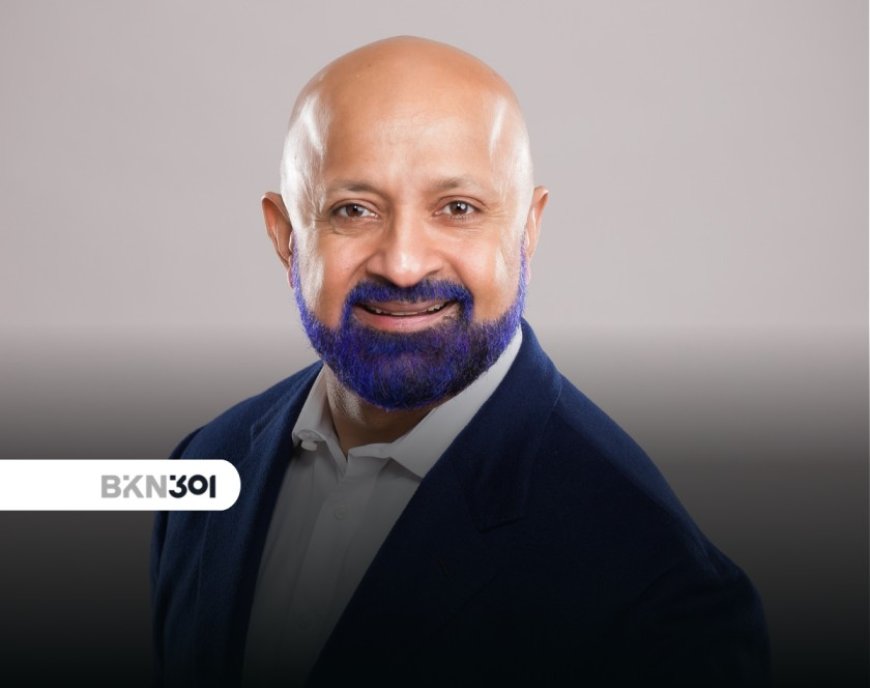
Written by: Mahesh Paolini-Subramanya, Chief Technology Officer at BKN301
Recent developments in the UAE have shown how tokenised deposits could change the way banks handle domestic and cross-border payments. For businesses operating across multiple markets, the ability to move money around the clock could make a real difference to how they manage payments and access funds.
Mashreq and Citi recently completed a live cross-border transaction using Swift's blockchain ledger, while Ant International piloted real-time dirham transfers and cross-border US dollar payments through HSBC's Tokenised Deposit Service. Both developments show how banks are beginning to use tokenised deposits for real-world payment transactions. But, while processing individual transactions is all well and good, where I see the focus for the industry now is making these capabilities work across different banks and existing payment systems.
The UAE has already made significant investments in digital financial infrastructure through initiatives such as the Central Bank's Financial Infrastructure Transformation Programme and Digital Dirham initiative. As tokenised deposits become part of this wider development, it’s time for banks to consider how they will integrate them into existing operations, and whether their systems and underlying data are ready to support them.
The business case for tokenised deposits
Tokenised deposits are digital representations of deposits held at regulated commercial banks which are recorded on blockchain-based ledgers. They have the potential to enable funds to move around the clock, allowing businesses to transfer money beyond traditional banking hours while operating within established banking frameworks.
This flexibility is particularly valuable for businesses managing liquidity across multiple markets. Having access to funds when they are needed, regardless of time zone, improves cash flow management and reduces the amount of capital left idle while payments are processed.
Yet delivering this becomes more complicated when money needs to move between different banks and markets, particularly when institutions operate on different systems. I expect this to become an increasingly important consideration as more banks introduce tokenised deposit services.
Interoperability will be critical to adoption
At the heart of this is interoperability. As more banks develop their own tokenised deposit networks, differences between systems could create barriers to transferring value between institutions.
A payment might move almost instantly within one bank's network but then face delays when it needs to reach another institution operating on different infrastructure. This can leave liquidity fragmented across networks and introduce additional operational complexity, which then undermines the benefits that tokenisation promises to bring.
For tokenised deposits to be adopted more widely across GCC banks, financial institutions need common standards that allow different payment networks to communicate. But this also depends on the information moving between those systems. If one bank cannot access or reconcile the same transaction records as another, payments will still face delays regardless of how quickly the underlying technology transfers funds.
Building banking infrastructure for tokenised payments
The GCC may be better positioned than other markets, where banks are managing decades of connected legacy systems. A new generation of fintech firms is building cloud-native, modular banking infrastructure from the ground up, without having to work around the same legacy constraints.
This gives GCC banks greater flexibility to introduce new payment capabilities with interoperability built in from the outset. Rather than developing separate systems for each new service, a modular, API-driven architecture allows banks to connect tokenised deposits with their wider banking operations without having to rip out and replace their core systems. An orchestration layer can then coordinate how these systems work together, managing the flow of transactions and information between payment networks while maintaining compliance checks and operational oversight.
However, the reliability of these connections also depends on the data behind them. Banks generate enormous volumes of financial data, from transaction histories and payment records to customer and credit information, much of which is stored across disconnected systems. Introducing tokenised deposits without addressing this fragmentation makes it harder to maintain consistent oversight, especially when transactions move between traditional banking systems and blockchain-based networks.
To properly address this, banks need a unified and governed data foundation that brings together information from different sources, so that payments can be processed and reconciled using consistent and reliable records, with clear audit trails to ensure every transaction is accounted for.
What banks need to get right now
As tokenised deposits become more widely used, banks need to consider now how they fit into their existing operations and what changes are needed to support them. This starts with understanding where systems are disconnected and whether the infrastructure already in place can accommodate new payment services without adding further complexity.
I believe banks should be thinking beyond tokenised deposits alone. With new forms of digital money continuing to develop, it makes little sense to build separate infrastructure for each one. Banks that invest in more flexible systems now will be better placed to introduce new capabilities as the market develops, without repeatedly having to overhaul their operations.
About Author:
Mahesh Paolini-Subramanya is Chief Technology Officer at BKN301, leading the company's Sovereign AI financial Infrastructure platform. With a long track record in startups and innovative companies, he joined BKN301 after serving as CTO at Klar, a digital financial services platform in Mexico. Prior to that, he was CTO at BlockFi, providing payments, wealth management, credit and cryptocurrency accounts to over 500,000 customers with $15bn in AUM. He has also held executive roles at Ubiquiti Networks, Factom and Vocalocity (now Vonage Business), and was named among the Top 25 Fintech CTOs of 2022.
What's Your Reaction?
 Like
0
 Dislike
0
 Love
0
 Funny
0
 Angry
0
 Sad
0
 Wow
0