



































































Beyond Visibility: Why Relevance Will Define the Future of Fintech Media
Beyond Visibility: Why Relevance Will Define the Future of Fintech Media

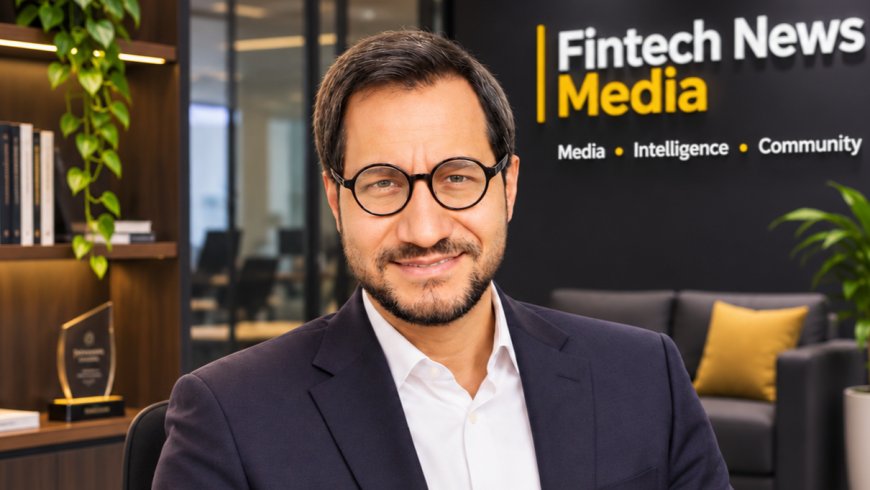
As fintech ecosystems expand across markets, specialised media must move beyond content generation and audience reach to deliver regional intelligence, credible journalism and meaningful connections.
By Qasim Qazi, Founder of Fintech News Media
The media industry has become exceptionally good at generating visibility. Publishing content, distributing press releases, securing online exposure and reaching audiences across multiple digital platforms have never been easier. Artificial intelligence has accelerated this transformation, making it possible to produce and distribute content at a scale that would have been difficult to imagine only a few years ago.
But there is an important distinction that deserves greater attention: visibility does not necessarily translate into relevance, and content distribution does not automatically create value.
This distinction is particularly important in financial technology, an industry where developments in one market can have very different implications in another. A regulatory announcement in Saudi Arabia, a digital payments development in Pakistan, an open banking initiative in the UAE or a digital assets policy change in Hong Kong may all be part of the global fintech conversation. However, understanding their commercial significance requires knowledge of the markets, institutions, regulatory environments and businesses involved.
As fintech becomes increasingly interconnected, I believe the next competitive advantage for specialised media will not simply be the ability to publish more content. It will be the ability to understand markets, identify relevant developments and connect the right information with the right audiences.
A global fintech industry with distinctly regional realities
The scale of the global fintech industry illustrates why specialised, regional understanding matters.
According to KPMG's Pulse of Fintech H2 2025, global fintech investment rebounded to approximately US$116 billion in 2025, compared with US$95.5 billion in 2024. However, the regional distribution of investment reveals a very different picture across markets.
The Americas attracted US$66.5 billion, while Europe, the Middle East and Africa (EMEA) collectively received US$29.2 billion. Asia-Pacific attracted US$9.3 billion. Interestingly, despite the increase in investment, global deal volumes declined to 4,719, their lowest level since 2017, indicating greater investor selectivity.
These figures demonstrate that fintech is not developing at the same pace or under the same conditions everywhere. Source: KPMG, Pulse of Fintech H2 2025.
Consider some of the developments across individual markets.
The UAE: The country has established itself as a major regional fintech destination. Qatar Development Bank's 2024 fintech sector report identified 686 fintech companies in the UAE, the highest number in its MENA comparison. Meanwhile, DIFC reported 1,677 AI, fintech and innovation-focused entities in 2025, reflecting the growing concentration of technology businesses within Dubai's financial ecosystem. These figures use different institutional definitions and should not be treated as directly comparable, but both illustrate the scale of the market's development.
Saudi Arabia: According to the Financial Sector Development Program's 2024 Annual Report, Saudi Arabia had 261 fintech companies operating by the end of 2024, exceeding its target for that year. The country also recorded more than SAR7.6 billion in cumulative fintech venture capital investment. Electronic payments accounted for 79% of retail payment transactions in 2024, compared with 70% in 2023. Source: Saudi Financial Sector Development Program.
Egypt: The country's digital financial services landscape demonstrates how fintech development is closely connected to financial inclusion. According to data published by AmCham Egypt, the proportion of adults with access to financial services increased from 27% in 2016 to 76% by June 2025. InstaPay's annual transaction value reached US$53 billion in 2024, demonstrating the growing importance of instant payment infrastructure. Source: AmCham Egypt, Digital Innovation.
Pakistan: The State Bank of Pakistan's FY2024–25 Payment Systems Review reported approximately 9.1 billion retail payment transactions, with 88% conducted through digital channels by volume. Digital retail payments increased from 5.5 billion transactions in FY2024 to approximately 8 billion in FY2025. This reflects a significant transformation in a market where financial inclusion, merchant digitisation, freelancer payments and cross-border financial services remain important opportunities. Source: State Bank of Pakistan, Annual Payment Systems Review FY2024–25.
Qatar: Qatar Development Bank's fintech sector report identifies 102 fintech companies in the country in its 2024 MENA comparison. Its analysis also projects the GCC fintech market to grow from QAR5.6 billion in 2023 to QAR31.7 billion by 2030, representing a projected compound annual growth rate of 25%. Source: Qatar Development Bank, Qatar's FinTech Sector.
Hong Kong: The Hong Kong Fintech Ecosystem Report, published by HKUST Business School and its research partners in April 2025, identified more than 1,100 fintech companies, including ten unicorns, with over 25,000 people employed in the sector. The report also highlighted growth in blockchain applications and digital assets between 2022 and 2024. Source: HKUST Business School.
These statistics tell an important story. Each market has its own opportunities, priorities, regulatory developments and growth drivers. A development that attracts significant attention in one country may have limited relevance elsewhere, while a relatively small local regulatory change could create substantial opportunities for businesses operating in that particular market.
For specialised media, understanding these distinctions is essential.
1. Visibility is not the same as relevant reach
In an increasingly crowded digital environment, businesses often evaluate media exposure through impressions, readership, website traffic and social media engagement.
These metrics have their place, but they do not tell the complete story.
Imagine a fintech startup entering Saudi Arabia. Its objective may be to connect with local banks, regulators, investors or potential commercial partners. A story reaching a large international audience is useful, but its commercial relevance depends significantly on whether the right stakeholders in Saudi Arabia actually see it.
Similarly, a payments company expanding into Pakistan may benefit more from exposure among local financial institutions, payment service providers and fintech professionals than from broad international distribution without a relevant audience.
This is where specialised media can create a meaningful difference.
The objective should not simply be to maximise the number of people who see a story. It should be to understand who needs to see it, why the development matters to them and which markets offer the most relevant audience.
For fintech companies, investors and institutions, relevant reach can be considerably more valuable than generic visibility.
2. Regional intelligence matters more than content volume
Artificial intelligence is changing how media organisations operate. It can help researchers analyse information, identify developments, summarise reports and improve editorial efficiency.
I see significant opportunities in these technologies, and I believe AI will become an increasingly important part of the future of specialised media.
However, generating more content does not necessarily mean producing better journalism.
A regulatory announcement requires interpretation. An investment announcement needs to be understood within the wider funding environment. A new financial product needs to be evaluated against local market requirements, competition and customer behaviour.
These are areas where regional knowledge, editorial judgment and verification remain essential.
For example, fintech businesses considering expansion into the UAE and Saudi Arabia cannot assume that the same licensing requirements, regulatory processes or commercial strategies will apply in both markets.
Likewise, developments in Pakistan's digital payment infrastructure should be understood within the country's financial inclusion priorities, banking landscape and evolving regulatory framework.
The opportunity for specialised media is to combine technology-driven research with human understanding, producing information that is not only accessible but also meaningful to the people making business decisions.
3. The next generation of media must connect ecosystems
Fintech is fundamentally an interconnected industry.
Startups require access to investors, financial institutions and technology partners. Investors need reliable information about emerging companies, market developments and regulatory environments. Banks and financial institutions are looking for innovation partners, while regulators need to understand developments shaping their respective markets.
Media can play an important role in bringing these stakeholders closer.
However, this requires a broader approach than simply publishing announcements and distributing company news.
It means developing platforms that help stakeholders discover relevant opportunities, understand regional developments, follow emerging companies and participate in meaningful industry conversations.
It also means recognising that a fintech company in Pakistan may be looking for expansion opportunities in the UAE, while an investor in Europe may be researching opportunities in Saudi Arabia or Egypt.
Connecting these markets requires consistent coverage, contextual understanding and relationships within the respective ecosystems.
The real opportunity is to move from being a source of information to becoming an active connector of fintech ecosystems.
4. Why we are building Fintech News Media differently
This is the philosophy behind the direction we are building at Fintech News Media.
What started as a specialised fintech news platform in 2024 has developed into a broader cross-regional media ecosystem, with operations and coverage spanning the UAE, Saudi Arabia, Egypt, Qatar, Pakistan, Europe, the USA and Hong Kong.
Our ambition is to connect these markets through three interconnected pillars:
Relevant Reach: Helping fintech companies, financial institutions and industry stakeholders reach audiences that matter within their respective markets.
Regional Intelligence: Delivering specialised fintech journalism, regulatory coverage, market developments and industry insights with an understanding of local context.
Ecosystem Connections: Creating opportunities for startups, investors, regulators, financial institutions and industry leaders to engage across markets through media, industry conversations and community initiatives.
We are also developing FinIntel as our fintech intelligence platform, extending this vision beyond traditional media coverage towards structured information, startup intelligence and market insights.
The distinction is important. Fintech News Media focuses on specialised media, visibility and ecosystem connections, while FinIntel aims to make fintech intelligence more accessible, structured and actionable.
Together, these initiatives reflect our belief that the future of fintech media should be built around more than publishing volume.
It should be about delivering information and connections that help the ecosystem move forward.
5. Measuring value beyond impressions
For media companies and businesses investing in communications, I believe it is time to reconsider how we evaluate the effectiveness of media exposure.
Website traffic, social media impressions, readership and publication frequency remain important indicators. However, they should be complemented by more meaningful measures.
For example:
-
Are we reaching relevant fintech professionals and decision-makers?
-
Are our stories attracting audiences in the markets where businesses are looking to grow?
-
Are we helping investors discover companies and understand emerging opportunities?
-
Are we providing useful context around regulatory and market developments?
-
Are our platforms creating conversations and connections that continue beyond publication?
These questions are particularly important as AI makes content production and distribution increasingly accessible.
When content becomes easier to generate, the value of editorial judgment, trusted information, regional expertise and established industry relationships becomes even more significant.
Media organisations that build credibility through consistency and relevance will have an important advantage over those competing primarily on content volume.
The future belongs to relevant media
I do not believe that traditional media and technology need to compete with each other. In fact, I see the strongest opportunities emerging from their combination.
AI can improve research, efficiency and distribution. Data can help identify market developments and audience interests. Digital platforms can connect stakeholders across geographical boundaries.
But the underlying purpose of specialised media must remain clear: to provide credible information, explain what matters and help people make better-informed decisions.
As fintech ecosystems continue to expand across the Middle East, Asia, Europe and the Americas, the demand for specialised regional intelligence and cross-border industry connections will become increasingly important.
For founders, investors and financial institutions, the question should not simply be where their stories can be published or how many impressions they can generate. It should be whether their communications are reaching the people, markets and communities that matter to their business objectives.
For media organisations, the challenge is equally clear: to build audiences through trust, not just volume; to create relevance, not just reach; and to connect ecosystems rather than simply report on them.
At Fintech News Media, this is the direction we believe in.
Because visibility creates awareness, regional intelligence builds understanding, and meaningful connections create lasting value.
The future of fintech media will not belong to those who generate the most content. It will belong to those who make information matter to the right people, in the right markets, at the right time.
About the Author
Qasim Qazi is the Founder of Fintech News Media and Nexus Fintech Forum, and the host of The Fintech Minds podcast. A fintech media entrepreneur and ecosystem builder based in Riyadh, he works at the intersection of fintech media, intelligence and industry engagement, connecting startups, investors, financial institutions, regulators and industry leaders across the Middle East, Pakistan, Europe, the USA and Hong Kong.
Through Fintech News Media, Qasim is building a cross-regional fintech media platform focused on specialised journalism, regional market intelligence and meaningful ecosystem connections. His work is driven by a vision to make fintech information more accessible and strengthen collaboration across emerging and established financial markets.
Lets Connect: https://www.linkedin.com/in/qasimqazi/
What's Your Reaction?
 Like
0
 Dislike
0
 Love
0
 Funny
0
 Angry
0
 Sad
0
 Wow
0