

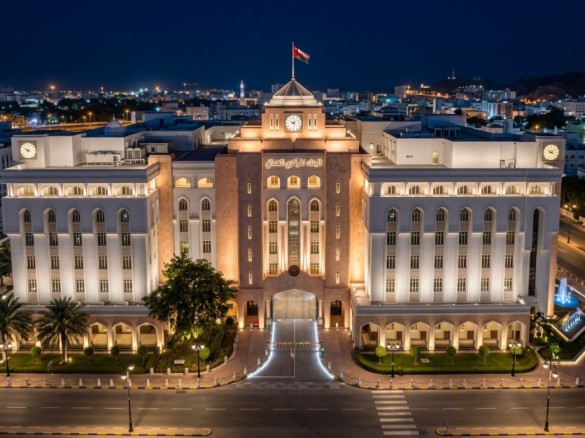
Muscat, Oman: Oman’s banking sector maintained strong growth momentum during the first half of 2026, with total outstanding credit rising 12.3% year-on-year to RO38.2 billion by the end of June, according to the latest data from the Central Bank of Oman (CBO).
Banking sector deposits also recorded double-digit growth, increasing 13% year-on-year to RO37.3 billion, highlighting continued expansion in lending activity and funding across the Sultanate.
The growth in credit was primarily driven by private sector businesses and households, which continued to account for the largest share of financing demand.
Private Sector Drives Credit Growth
Bank credit extended to the private sector increased 9.9% year-on-year to RO30.8 billion at the end of June 2026.
Non-financial corporations accounted for the largest share of private sector credit at 48.2%, followed by households at 43.2%. Financial corporations represented 6%, while other sectors accounted for the remaining 2.5%.
Conventional banks recorded 12.8% annual growth in total outstanding credit during the period.
Within conventional banking, private sector credit increased 9.9% to RO23.6 billion. Banks also expanded their investments in securities, which rose 26.2% year-on-year to RO7.2 billion.
Investments in government development bonds increased 24.7% to RO2.5 billion, while investments in foreign securities climbed 27.1% to RO2.6 billion.
Deposits Continue to Expand
On the funding side, private sector deposits across Oman’s banking sector increased 11.8% year-on-year to RO24.5 billion at the end of June.
Households remained the largest source of private sector deposits, accounting for 48.1%, followed by non-financial corporations at 35.1%. Financial corporations contributed 15.1%, while other sectors accounted for 1.7%.
Deposits with conventional banks grew 14.2% year-on-year to RO29.4 billion. Private sector deposits represented 65.5% of conventional banks’ total deposits and increased 12.6% to RO19.3 billion.
Government deposits with conventional banks rose 7% to RO6.3 billion, while deposits from public enterprises recorded particularly strong growth, surging 72.3% to RO2.6 billion.
Islamic Financing Reaches RO8 Billion
Oman’s Islamic banking sector continued to expand during the first half of 2026, although growth remained slower than in conventional banking.
Total assets of Islamic banks and Islamic banking windows increased 8.7% year-on-year to RO10 billion by the end of June.
Financing provided by Islamic banks and windows rose 10.5% to RO8 billion, while total deposits increased 9.7% to RO7.8 billion.
Islamic banking assets accounted for approximately 18.9% of total banking sector assets, underscoring the growing role of Sharia-compliant financial services in Oman’s banking system.
Interest Rates Ease Amid Lower Policy Rates
Interest rates in Oman also eased during the year to June 2026, reflecting lower policy rates.
The weighted average interest rate on Omani rial deposits with conventional banks declined to 2.245% in June 2026, from 2.560% a year earlier.
The weighted average lending rate also decreased, falling from 5.487% in June 2025 to 5.331% in June 2026.
Meanwhile, the overnight Omani rial domestic interbank lending rate declined to 3.505% in June 2026, compared with 4.189% in the same month a year earlier.
According to the CBO, the decline in interest rates was driven by a reduction in the average repo rate applied to liquidity injections. The rate fell from 5.000% in June 2025 to 4.250% in June 2026, broadly reflecting movements in US Federal Reserve policy rates.
The latest figures point to continued resilience in Oman’s banking sector, with strong credit and deposit growth alongside expanding Islamic finance activity and easing borrowing and deposit costs.
